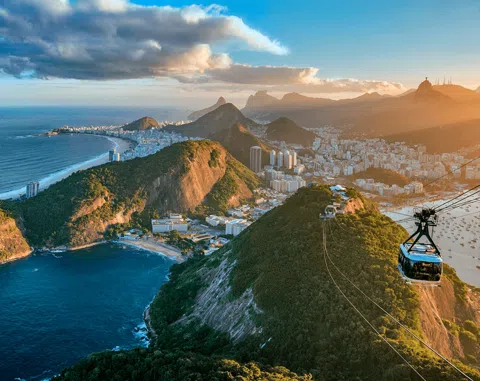
In this area
The Rio De Janeiro issue
Centro, Rio de Janeiro: the city’s oldest downtown in full daylight
Rio’s founding district is a hard-working tangle of monasteries, modernist icons, Belle Époque cafés and port-side reinvention — best explored on foot, in daylight, with the office crowd as your guide.

By Rodrigo NascimentoGranite peaks and Atlantic surf, trailhead to seawall
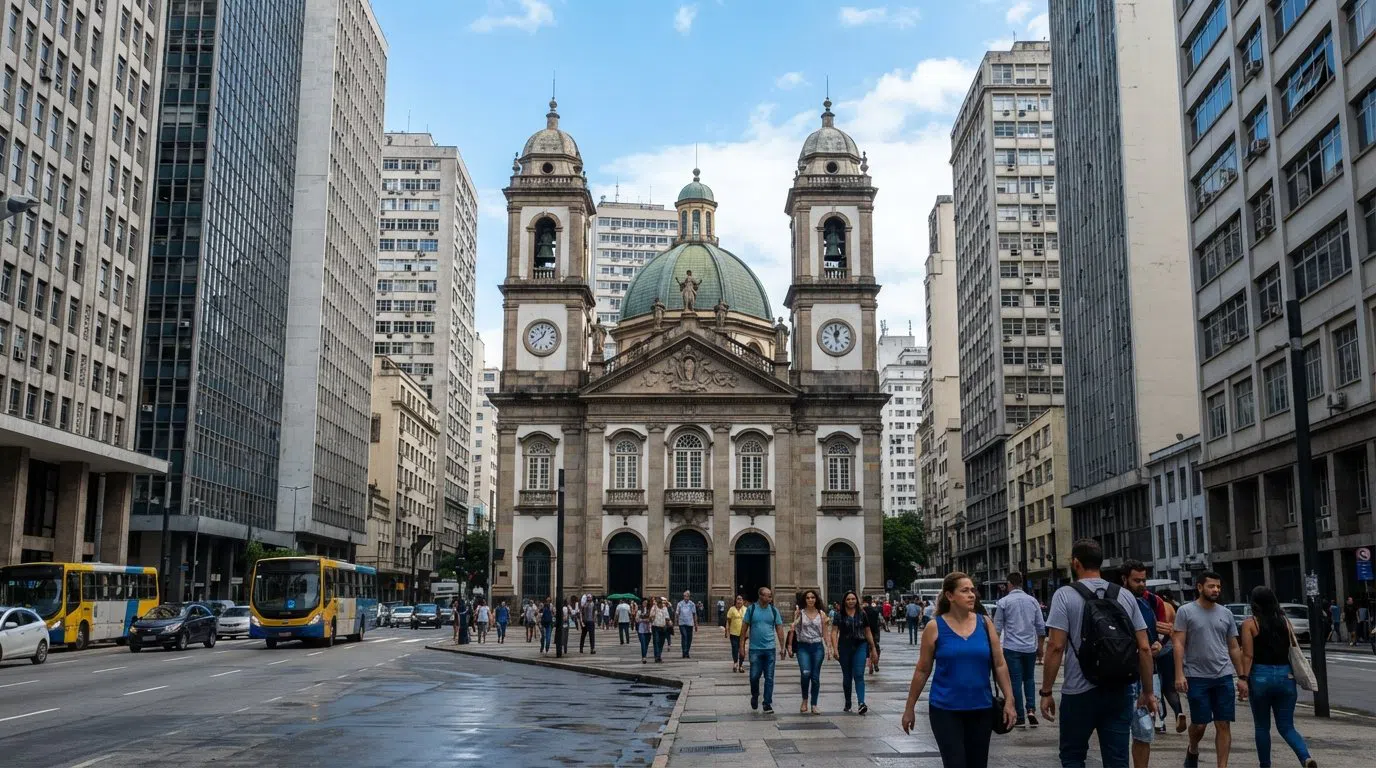
Rio began here, and Centro still carries the city’s first pulse in the old bones of its streets. One moment you’re under the gilded hush of the Mosteiro de São Bento; the next you’re staring up at the white ribs of the Museum of Tomorrow on Praça Mauá, a few tram stops and several centuries apart. That’s the pleasure of this district: it doesn’t pretend to be one thing. It is courts and churches, banks and book rooms, market stalls and marble cafés, a downtown that works hard from nine to six and then folds its chairs away. Come in the light, follow the office crowd, and let the city show you how it was built.
What Centro is known for
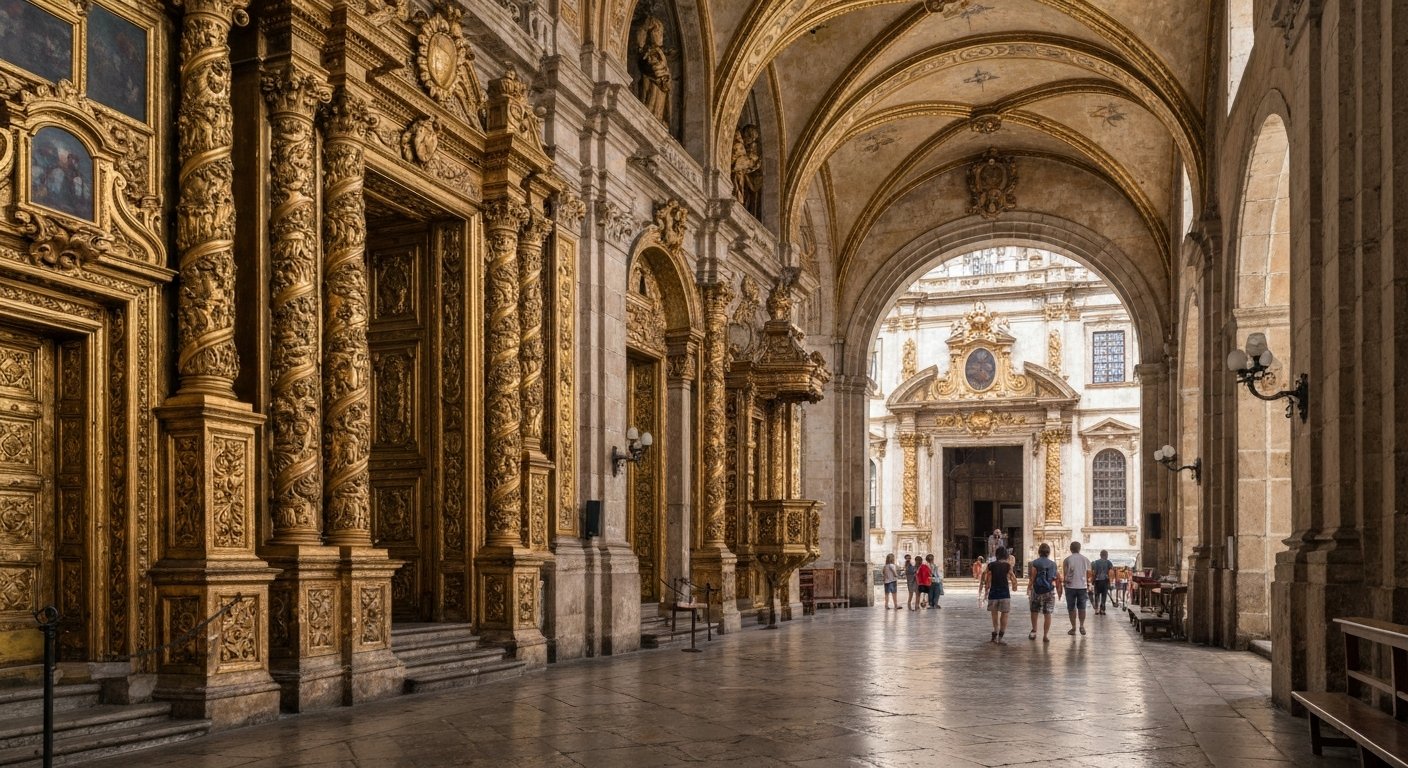
Centro is Rio’s historical and civic core, the place where the city’s story still sits in plain sight rather than behind glass. The contrast comes at you fast and without apology. The Mosteiro de São Bento, begun in 1590, looks plain from the outside, then opens into an interior smothered in gilded baroque carving; a few blocks away, the Catedral Metropolitana de São Sebastião rises like a concrete cone, 75 metres wide and finished in 1979, with four vast stained-glass windows running from floor to ceiling. Between them sits the Igreja da Candelária, inaugurated in 1898 after 123 years in the making, and the Real Gabinete Português de Leitura on Rua Luís de Camões, a Neo-Manueline reading room so beautiful it has been counted among the world’s most stunning libraries.
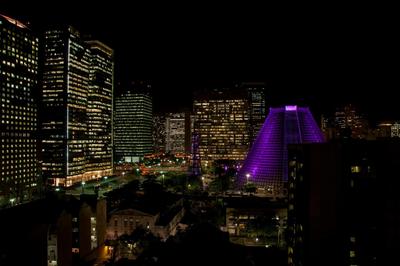
That is the Centro rhythm in one walk: colonial piety, imperial ambition, modernist confidence. It’s also a district that remembers its own reinvention. The old port has become Porto Maravilha, and the new landmark there is Santiago Calatrava’s Museu do Amanhã on Praça Mauá, all white spines and futuristic angles against the bay. Centro is not a postcard neighbourhood; it is a history lesson with traffic noise, VLT bells and office lanyards attached. Which is exactly why it feels so alive on weekdays. The city’s actual machinery still runs through here.
Plan your Rio De Janeiro trip
Live prices from our booking partners.
Guests & rooms
Free cancellation on many rooms. We may earn a commission when you book.
Where to eat & drink
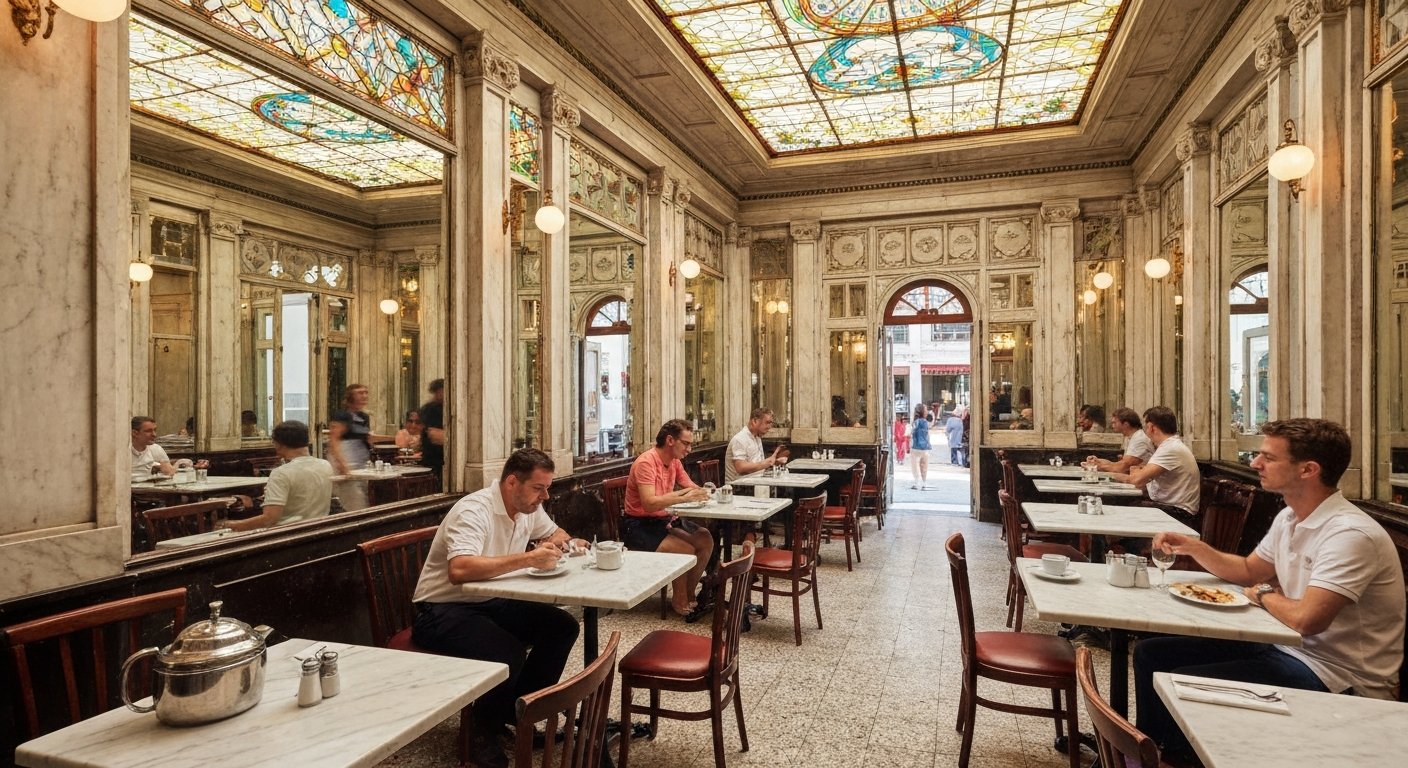
The first stop, if you have any affection for old downtowns, is Confeitaria Colombo on Rua Gonçalves Dias. Founded in 1894, it is the kind of Belle Époque café that makes you slow your pace without quite meaning to: Belgian mirrors, a stained-glass skylight, marble and jacaranda, all of it barely changed in over a century. Come mid-morning for coffee and the famous empada de camarão, around R$15, or book the upstairs Restaurante Cristóvão for the midday buffet. It fills fast — this is still a working downtown — so the trick is to arrive before noon or after 2pm, when the lunch tide has eased and the room breathes again.
For lunch with the office crowd, I like the lanes around Praça XV, where the city’s old centre still feels human-sized. Travessa do Comércio, reached through the colonial Arco do Teles, is a car-free row of townhouse bars and restaurants, and from around five the after-work happy hour starts to gather. You can feel the day loosening there: ties slackening, cold drinks arriving, the shutters of the street life being pulled up for one more round before Centro goes quiet again.
On the same historic waterfront, Cais do Oriente at Rua Visconde de Itaboraí 8 gives you a more polished table, with Oriental and Mediterranean plates inside a restored nineteenth-century warehouse near the cultural centres. It’s one of those places that makes sense only in Centro, where the old port and the new museum district sit shoulder to shoulder and nobody seems surprised by the collision.
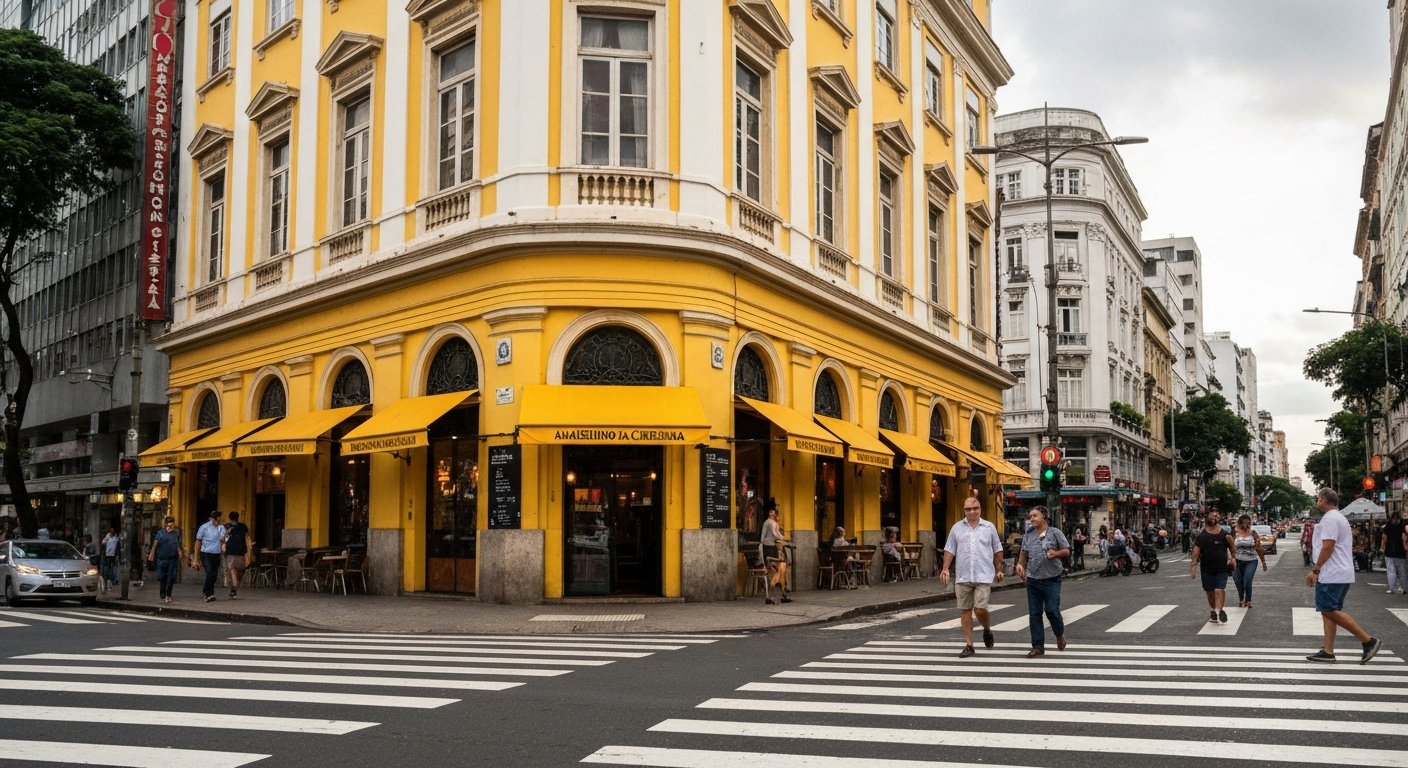
For a proper boteco pause, Amarelinho da Cinelândia is the downtown classic. On Praça Floriano, under the Theatro Municipal, it has been pouring cold chopp and serving boteco snacks since 1921 from its yellow corner terrace, which is one of the best people-watching perches in the district. Sit there late afternoon and you can watch the city change register in real time: workers heading home, the square thinning, the grand façades turning gold, then grey.
Going out
Let’s be honest about Centro after dark: the office district goes quiet and shuttered within an hour of closing. For clubs, samba houses and street parties, you cross to neighbouring Lapa, which is only a few minutes away. Centro’s own nightlife is narrower, but it has one ritual that matters enough to build an evening around.
In the Saúde quarter behind the port, in the area known as Pequena África — Little Africa — the cobblestones of Pedra do Sal host what many consider the most traditional roda de samba in the city. It happens every Monday night from about 8pm, is cancelled if it rains, and returns again on Fridays. It’s free and open to all, and the crowd is locals dancing with caipirinhas from street vendors rather than a tourist show. Get there early if you want to stand near the musicians, carry only small cash, keep your phone tucked away and take a ride app back. That’s the whole etiquette: show up respectfully, stay loose, and let the rhythm do the rest.
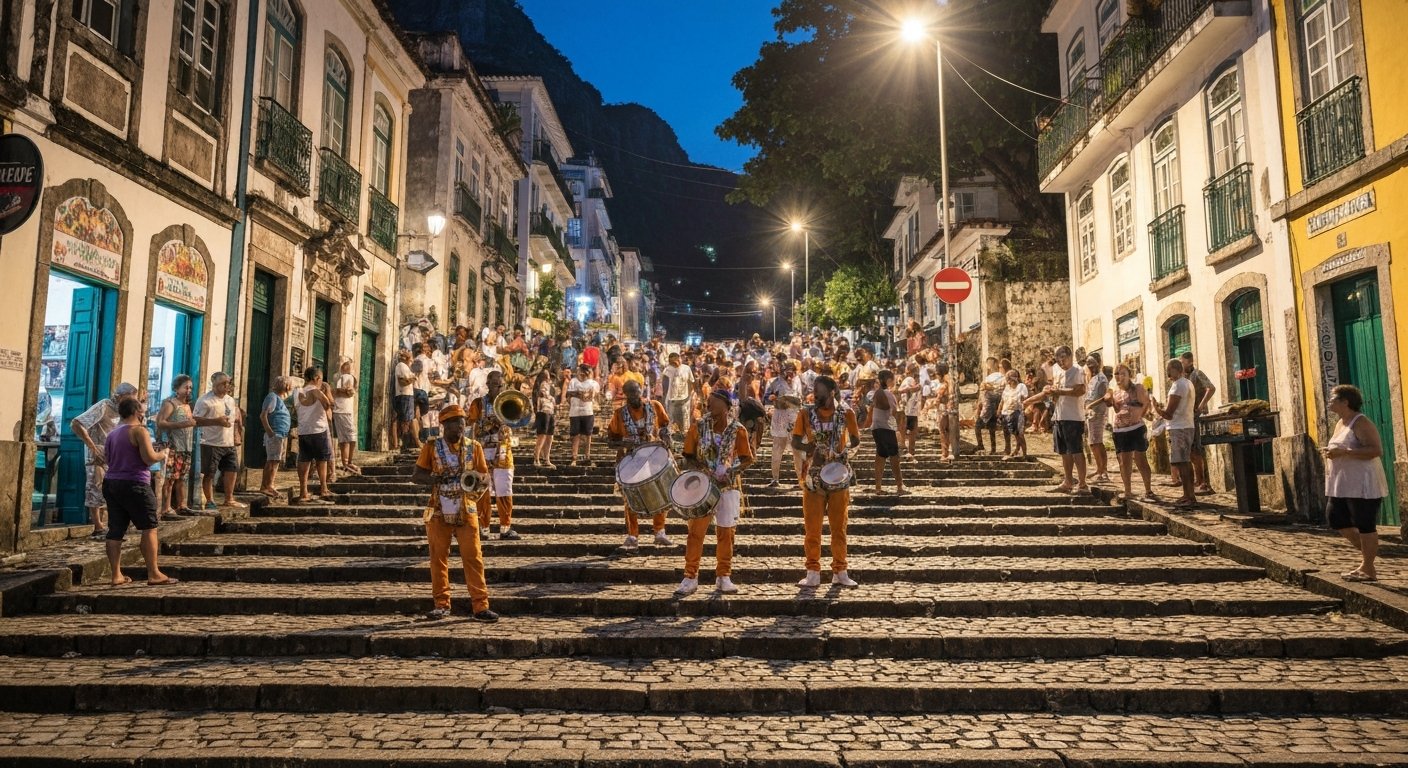
Outside that Monday ritual, the after-work bars around Arco do Teles and the terrace at Amarelinho carry the early evening. That’s Centro’s version of going out: not a late-night sprawl, but a measured drift from desk to drink to departure. By the time the night deepens, the city’s real pulse has moved on to Lapa.
Things to do and what to see
This is the densest sightseeing walk in Rio, and the best way to understand Centro is to do it on foot, in sequence, with the day still young. Start at Praça XV and the Paço Imperial, the colonial royal palace, then step into the Centro Cultural Banco do Brasil (CCBB) on Rua Primeiro de Março. It’s a neoclassical bank turned free cultural centre with rotating blockbuster exhibitions, open Wednesday to Monday, and it gives the district a useful modern counterpoint: not just preservation, but use.
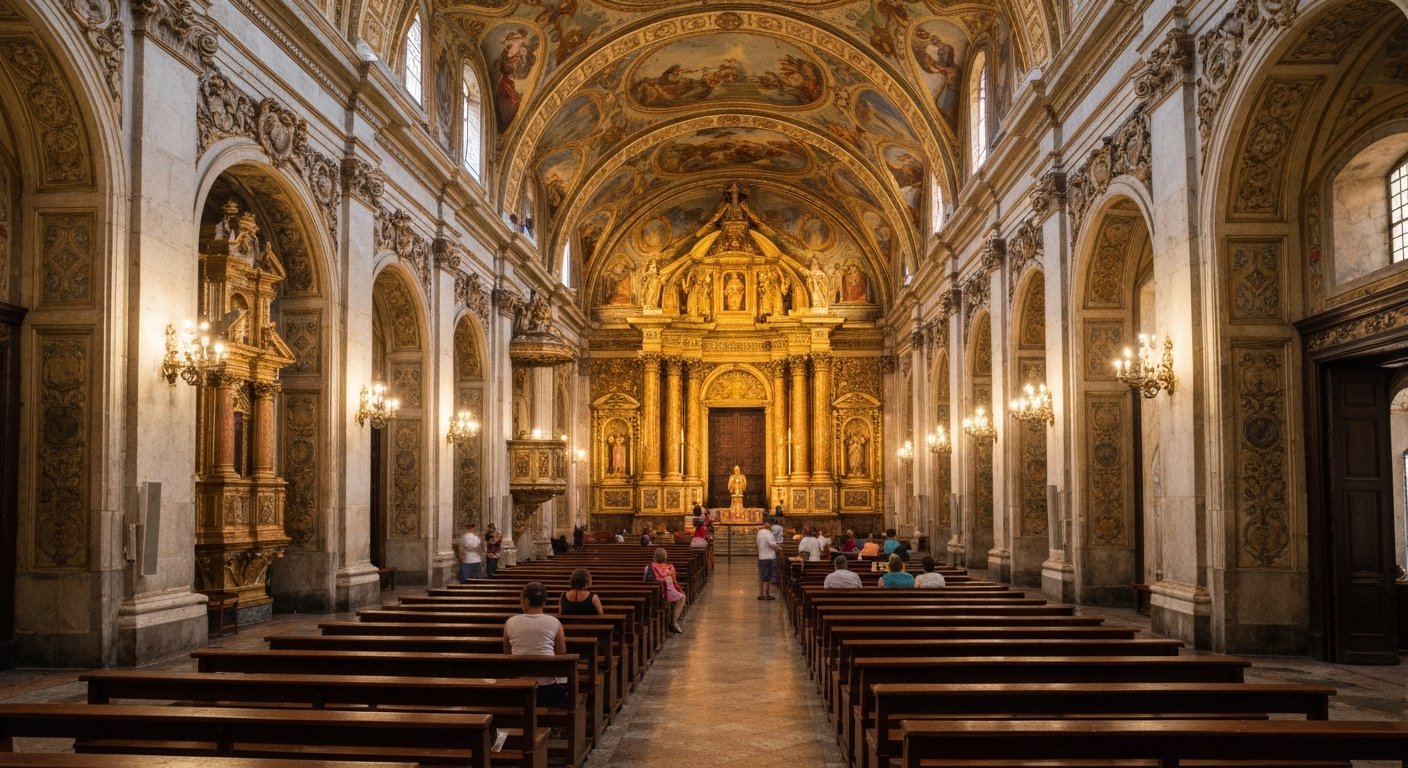
Walk the church spine next. The Igreja da Candelária faces Guanabara Bay with its baroque confidence intact. The Mosteiro de São Bento is worth timing for the Sunday 10am mass with Gregorian chant if your schedule allows it. And the Igreja de São Francisco da Penitência at Largo da Carioca is one of those interiors that stops conversation: gilded walls, a ceiling painting of the Glorification of Saint Francis, and some of the finest colonial art in Brazil.
Book ahead for the free tour of the Real Gabinete Português de Leitura, open Monday to Friday from 9am to 6pm. It is one of those rooms that still feels improbable in real life: Neo-Manueline carving, stacked books, and the sense that the city once had more patience for grandeur than it does now. Then move south to Cinelândia, where the 1909 Theatro Municipal, the Museu Nacional de Belas Artes and the Biblioteca Nacional line up around one grand square. This is where Rio performs its civic self, all marble, steps and institutional gravity.
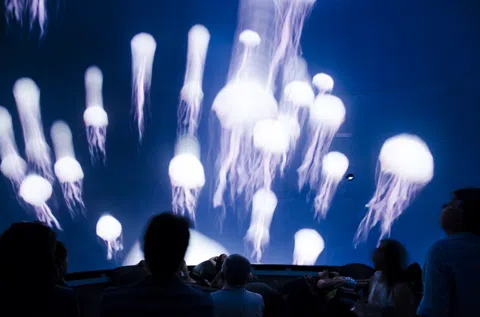
From there, take the VLT to Porto Maravilha. The Museum of Tomorrow (Museu do Amanhã) on Praça Mauá is R$40, free on Tuesdays, and open Thursday to Tuesday from 10am to 6pm. Next door, the MAR – Museu de Arte do Rio is R$20 and also free on Tuesdays. If you have energy left, AquaRio is South America’s largest aquarium, another piece of the regenerated port zone that makes the waterfront feel like a district rather than a single project.
Don’t miss in Centro
The stunning neo-Manueline library, Real Gabinete Português de Leitura.
The futuristic Museum of Tomorrow on the renovated Mauá Pier.
The historic pedestrian alleyways of Travessa do Comércio.
The port area is where Centro’s old and new selves shake hands. You can still feel the working harbour in the wind and the traffic, but the museums have given the waterfront a cleaner, more public edge. Ride the VLT out here rather than walking the emptier stretches; downtown is at its best when you let the tram do the long connective tissue and save your legs for the squares, steps and interiors.
Shopping & markets
If you want the real downtown shopping story, go to SAARA. The name comes from the merchants’ association Sociedade de Amigos das Adjacências da Rua da Alfândega, formed in 1962 by traders on Rua da Alfândega, but the market itself feels older than the acronym. It spreads across Rua da Alfândega, Rua Senhor dos Passos, Rua Buenos Aires and neighbouring lanes, with more than six hundred shops selling fabric, Carnival costumes, party supplies, toys, electronics, spices and cheap everything. The district was first settled by Arab and Jewish immigrants at the turn of the twentieth century, and it still has that restless, polyglot energy: loud, cash-friendly, expect bargaining on unpriced goods, and don’t arrive in a hurry. Uruguaiana is the closest metro, and the market opens Monday to Friday from 9am to 6pm, plus Saturday from 9am to 2pm.
For a very different downtown find, slip into A Gentil Carioca on Rua Gonçalves Lédo. Founded in 2003 by artists Ernesto Neto, Márcio Botner and Laura Lima, it occupies two restored 1920s townhouses in the SAARA quarter and sits comfortably in the Art Basel and Frieze circuit. That contrast is pure Centro: one street is bargain fabric and Carnival stock, the next is contemporary art in old domestic rooms. It’s a reminder that this neighbourhood has never been a museum piece, even when it is full of museums.
Where to stay in Centro
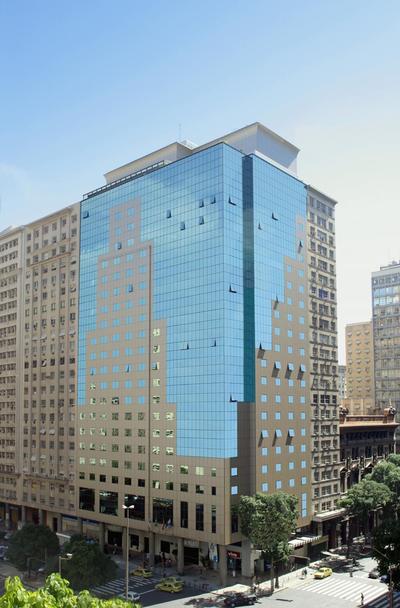
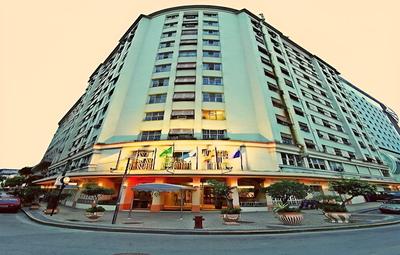
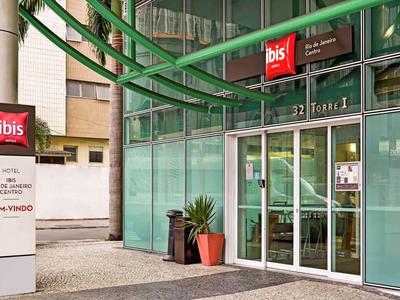
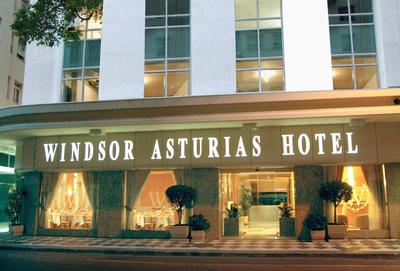
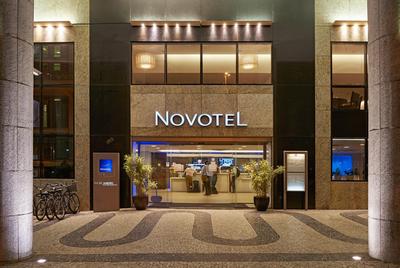
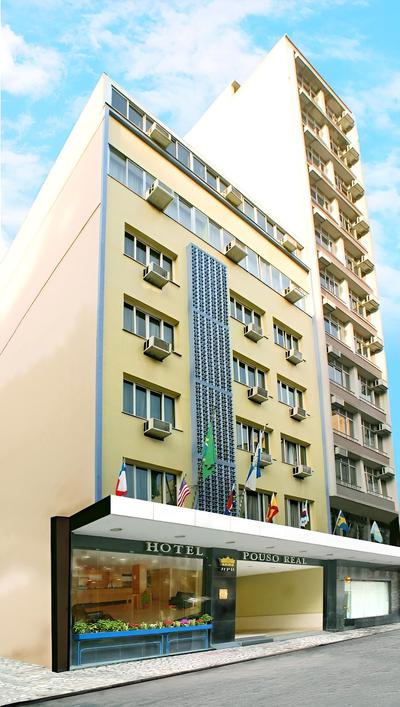
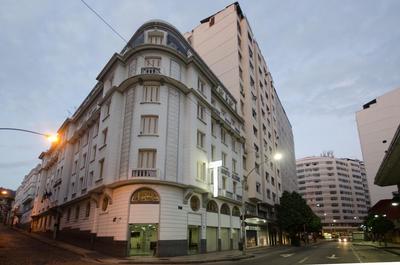
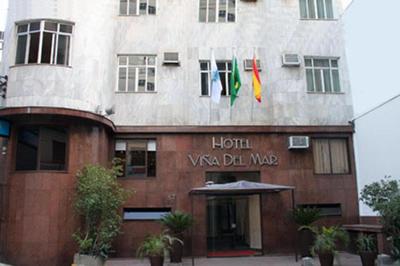
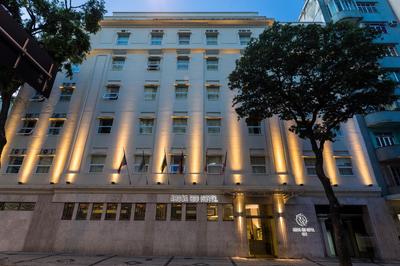
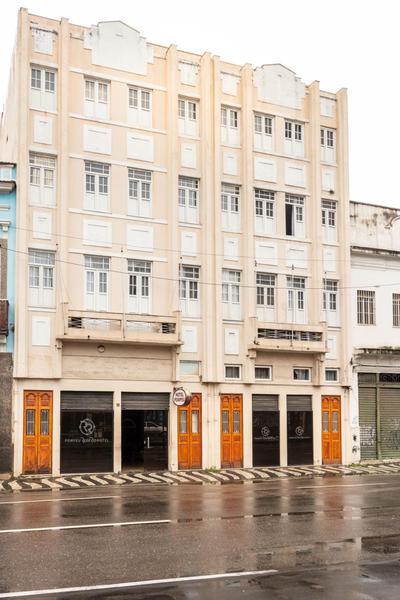
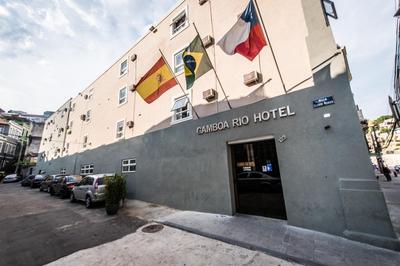
For most leisure travellers, Centro is a place to spend a day, not a base. You trade beach mornings for a commute, and the immediate streets empty in the evening. But there are a few cases where it makes sense: if you’re here for business near the courts and banks, on a tight downtown-sightseeing schedule, or catching an early flight from Santos Dumont, staying near Cinelândia can be practical. The area puts you within a short walk of the Theatro Municipal, the museums and the metro, and there are chain options, including budget-friendly properties by the station, that are secure and well-connected.
Stay close to Cinelândia or Praça Mauá rather than on the quieter back lanes, and favour a property by a metro or VLT stop. That’s the difference between a useful downtown base and a lonely one. If your Rio fantasy involves beach, dining and a lively street scene after dark, base yourself in Ipanema, Leblon or Botafogo and come to Centro as a day trip. It does that job beautifully.
Hotels in Centro
Our best-rated stays in this neighbourhood. Prices are approximate “from” rates — confirmed at the provider when you continue. We may earn a commission if you book through our partners — at no extra cost to you.
In this area
In this area
In this area
In this area
In this area
In this area
In this area
In this area
In this area
In this area
In this area
Getting around
Centro is compact and best walked by day, and because it is the city’s transport hub, getting in and out is easy. The Metro (Line 1) stops at Cinelândia, Carioca and Uruguaiana, which is the one you want for SAARA, and links Centro to Copacabana and Ipanema in roughly 15–25 minutes. The VLT Carioca light-rail tram stitches the district together at street level, running from Santos Dumont Airport through Avenida Rio Branco to Praça Mauá and the Porto Maravilha museums, and out to the Novo Rio bus terminal and Central station. Ferries to Niterói leave from Praça XV. Contactless bank cards work on the metro, buses and ferries; the VLT uses the Jaé card.
For the port museums, ride the VLT to Praça Mauá rather than walking the emptier stretches. After dark, use ride apps rather than walking the quieter streets, keep valuables out of sight, and plan your sightseeing for daylight when downtown is at its liveliest and safest. Centro rewards that kind of attention. It is not trying to flatter you. It is showing you the city’s engine room, still running.
Gallery
Centro in pictures
Centro — your questions
Is Centro a good area to stay in Rio de Janeiro?
For most travellers, no. Centro works better as a daytime sightseeing district than as a leisure base, with no beach nearby and streets that empty after office hours. It makes sense for business trips, a focused downtown-culture stay near Cinelândia, or an early Santos Dumont flight. Otherwise, base yourself in Ipanema, Leblon or Botafogo and visit Centro on a day trip.
Is Centro safe to visit?
By day, yes — especially on the main avenues and around the metro stations, where the churches, museums and cafés are at their best. It thins out quickly after 7pm and on weekends, when quieter streets feel less comfortable. Sightsee in daylight, stick to main routes, keep your phone out of sight and use ride apps at night.
What are the must-sees in Centro Rio de Janeiro?
On one weekday walk, aim for Confeitaria Colombo, the Real Gabinete Português de Leitura, the Mosteiro de São Bento and Igreja da Candelária, the CCBB, Cinelândia’s Theatro Municipal, and SAARA. Then take the VLT to Praça Mauá for the Museum of Tomorrow, MAR and AquaRio in the regenerated port. Many churches and cultural centres are free; museums are free on Tuesdays.
How do you get around Centro without wasting time?
Walk the core by day, then use the Metro, VLT and ferries for the longer hops. Metro Line 1 stations at Cinelândia, Carioca and Uruguaiana connect to the beaches in about 15–25 minutes, while the VLT links Santos Dumont Airport, Praça Mauá, Novo Rio and Central. At night, use ride apps rather than walking the quieter streets.