The Rio De Janeiro issue
The best adventure experiences in Rio de Janeiro
From the Pedra Bonita hang-gliding ramp to a dawn scramble up Two Brothers and a baile funk that runs to sunrise — the definitive planner for an active group in Rio in 2026.

By Marit VanderbergRio's neighbourhoods, staircases and cable-car views
Rio de Janeiro is one of the very few great cities that never quite surrendered to itself. Granite peaks push up between the apartment blocks, a swathe of Atlantic rainforest spills down almost to the sand, and the ocean is close enough that you can be standing on a summit at dawn and paddling flat water by lunch. For an active group, this geography is the whole point: in Rio the adventure is not a day trip out of the city — it is the city.
What follows is a planner's guide to the best of that, organised the way you would actually build a trip: airborne first, then the climbs and hikes, then the water, the forest, and finally the loudest night out in South America. Throughout I've been honest about who each thing suits, how a group of mixed ability tends to fare, and what to budget. For somewhere central to base the group, begin with the Rio De Janeiro hotel search, and for wider context on neighbourhoods and seasons, the Rio De Janeiro guide fills in the background.
Take to the sky
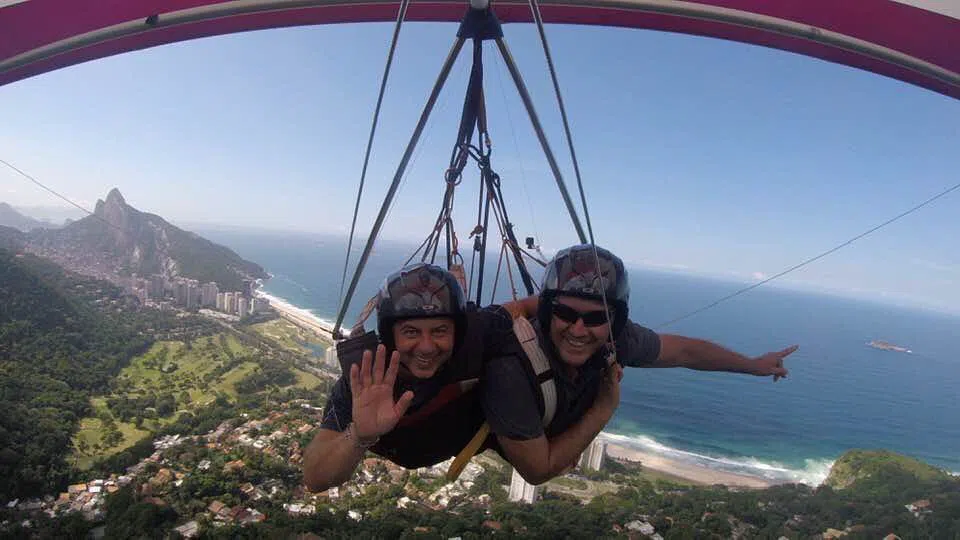
Rio effectively invented recreational hang gliding as a spectator sport — locals have been running off the Pedra Bonita ramp above São Conrado since the 1970s — and it remains the single most iconic thing you can do here. A Tandem Hang Gliding from Pedra Bonita flight (São Conrado, with Just Fly Rio) launches you off a wooden ramp strapped to a certified pilot, banking out over the rainforest before the long, silent glide down to São Conrado beach. It is calmer than it looks and needs no experience, but there is a logistical catch for groups: one passenger flies per pilot, so a party of eight goes up in sequence across a morning rather than together. Book the whole group onto a single slot so you fly back-to-back, go early when the air is stable, and — this matters — leave a buffer day in the itinerary, because flights are entirely weather-dependent. Reckon on roughly £160–200 per person (around R$1,199 in high season), GoPro footage included.
For a different vantage, a Doors-Off Helicopter Flight over Christ & Sugarloaf (departing central Rio, via 4Fly RJ or Vertical Rio) is the photographer's choice. These are small three-to-four-seat aircraft flown to ANAC safety standards, so a larger group again flies in relays across back-to-back slots. The doors-off configuration is what earns its keep — nothing between your lens and Christ the Redeemer's outstretched arms — though it is short at twenty to thirty minutes and priced accordingly, roughly £120–250 per person depending on the route. If the group cares more about the experience than the shot, the standard doors-on flights cost noticeably less and see the same skyline.
Plan your Rio De Janeiro trip
Live prices from our booking partners.
Free cancellation on many rooms. We may earn a commission when you book.
Earn the summit
Rio rewards effort with some of the most spectacular urban viewpoints anywhere, and there is a route here for almost every fitness level — provided you match the group honestly to the climb.
The gateway is the Sugarloaf Via Ferrata / Rock Climb (Urca, via Rio Mountain Sports on the CEPI route). This is a genuinely beginner-friendly way to climb one of the world's most recognisable rocks: you ascend by hand on a fully harnessed cabled route and, memorably, descend by cable car among the tourists who took the easy way up. Bookings are private only, with a maximum of two climbers per guide, so a larger group is split across several guides climbing together rather than in one string. No experience is needed, but the roughly hour-long approach trail asks for reasonable fitness. Budget around £75–90 per person (from R$480 per person for a pair).
At the other extreme sits the Pedra da Gávea Guided Summit Hike (São Conrado side), the toughest of Rio's big three and, for a fit group, the biggest payoff — a colossal flat-topped monolith with the whole coastline laid out below. This is a six-and-a-half to eight-hour day involving a genuinely exposed scramble known as the Carrasqueira, and I would only sell it to a group that is honestly fit and comfortable with heights. Always go with a guide: good operators carry climbing gear and will belay less confident members through the roped section, which is what makes a mixed-ability group feasible at all. Expect £45–70 per person for the guided tour.

For the best return on effort in the whole city, point the group at the Morro Dois Irmãos (Two Brothers) Hike (via Vidigal). Around an hour of climbing delivers a view over Ipanema, Leblon and the Lagoa that arguably beats anything more strenuous. It is very group-friendly — guided tours cap at roughly 15–20 people and include the moto-taxi or van ride up through the Vidigal favela — and it doubles as a respectful, guided window into favela life. Go with a local operator, both for straightforward access and because it channels money into the community; £25–45 per person, with sunrise or daytime departures.
Then there is the sentimental one: the Christ the Redeemer Hike via Parque Lage (Jardim Botânico), the Corcovado trail that lets you approach the statue on foot rather than by cog train. The bragging rights are real, but so is the caveat, and I won't soften it — there have been robberies on this trail, so a guide and a group are essential, not optional. Reputable operators run small multilingual groups from the lush gardens of Parque Lage; budget £30–50 per person, with statue entry extra. Do not attempt it alone.
On the water
If the mountains are Rio's spine, the sea is its social life, and much of the best group adventure happens on the water.
Start gently with a Surf Lesson at Arpoador (on the rocky point between Ipanema and Copacabana, with schools such as EverBest or Arpex). Arpoador's mellow, consistent beach break is close to ideal for total beginners, and because schools run small-group lessons — often capped at three per instructor, boards and wetsuits included — a whole party can learn at once. It is walkable from most Ipanema and Copacabana hotels, and there is a fitting reward at the end: the crowd that gathers on the Arpoador rocks to applaud the sunset. Lessons run about £30–70 per person with equipment.
For a change of tempo, the Stand-Up Paddle on Lagoa Rodrigo de Freitas (Lagoa, with C SUP) is the calm counterpoint to the adrenaline days. The lagoon is flat, central and effectively impossible to fall off in a panic, which makes it an easy group booking — lessons or simple board rentals from the deck, with sunset slots that turn the surrounding hills gold. At £25–40 per person it is the relaxed afternoon that a hard-charging itinerary needs.

To get properly offshore, the Cagarras Islands Boat Trip & Snorkel (departing the Ipanema–Copacabana stretch) runs out to a protected marine monument a few kilometres off the beaches, with the city skyline as the backdrop to your swim. It comes as shared speedboat or schooner trips or as private group charters (from around US$550 for the boat), and the swim-and-snorkel stops make it a natural party-on-the-water day. Visibility is best from October to March, and because it is weather-dependent you should keep the date flexible; roughly £45 per person shared, or from about £430 for a private group charter.
If the group's ambition is a straightforward celebration rather than a snorkel, the Guanabara Bay Party Catamaran (departing central Rio, e.g. Velas do Rio) is purpose-built for it. Large catamarans host 20–50 people for private day or sunset parties with open bar and a BBQ, swimming off the boat, and postcard scenery on every side. Shared tickets run about £45–70 per person; a private charter, if the whole party wants the boat to itself, starts around £450 an hour. It is the obvious centrepiece for a group day and worth booking private if the numbers justify it.
For those who want to go under rather than over the surface, Discover Scuba Diving (at the Cagarras, or on the popular day trip to Arraial do Cabo) needs no certification — chaperoned discover dives let a whole group try together for the first time. Several Rio dive centres run group excursions in the bay, but for guaranteed clarity the full-day trip to Arraial do Cabo, nicknamed "Brazil's Caribbean," is worth the drive, with two to three hours each way. Warm water and visibility are best October to March. Budget £70–110 per person for a discover-dive day, and go in knowing the Arraial option is a long day out of the city.
Into the forest
Not everyone in a group hikes, and Rio has an elegant answer. The Tijuca Rainforest Open-Top Jeep Tour (Tijuca) drives into the world's largest urban rainforest — a hand-replanted 19th-century forest that is a genuine conservation story in its own right — taking in waterfalls, wildlife and viewpoints without the climb. Open jeeps seat around seven or eight and tours are sold as small-group or private with hotel pickup, and the easy hour-long trail suits mixed fitness. At £30–55 per person for a half-day of about four hours, it is the low-effort adventure that keeps non-hikers happily on side.

A louder kind of adrenaline
Rio's nightlife deserves a place in any adventure itinerary, and its most authentic big night out is the Rocinha Baile Funk Party & Pub Crawl (Rocinha). A baile funk is a vast open-air sound-system party inside Latin America's largest favela, and it is precisely the sort of thing you should only ever do on an established guided tour — the guide is what makes it safe, legible and accessible. Crawls are explicitly group-oriented, capping at around 20, starting near 11:30pm and running to dawn; some drinks are included in the £30–45 per person. It is the most authentic large-group celebration in the city, but independent entry to a baile is not advisable — book the guided version, every time.

Practicalities
Timing and season. Rio's water activities — the Cagarras, discover dives, Arraial do Cabo — are at their clearest from October to March, which is also the hot, lively (and busier, pricier) summer. Anything airborne or on rock is weather-dependent, so build one or two buffer days into a short trip rather than pinning the hang gliding or helicopter to your last morning.
Getting around. The metro is quick and safe along the Ipanema–Copacabana–Centro corridor, but most adventure operators include hotel pickup, which is worth taking for early starts to São Conrado, Vidigal or Tijuca. Use the app-based taxis (99 or Uber) rather than flagging cabs, especially at night.
Cash and cards. Cards are widely accepted, but carry some Brazilian reais for guides' tips, beach vendors, moto-taxis in Vidigal, and drinks on the crawl. Keep valuables minimal on the trail hikes and in the favela — travel light and follow your guide's lead.
Budget. A serious week could pair one splurge (hang gliding or a doors-off flight, £120–200+) with several mid-range days (hikes, surf, jeep and SUP at £25–70 each) and one group centrepiece (a private catamaran from around £450). Booking group experiences privately often works out better value per head than you'd expect once the boat, jeep or guide is shared across the party.
One honest note to close. Rio's adventures are world-class, but the good ones are guided for a reason — safety on the exposed hikes and the favela nights genuinely depends on it. Book reputable operators, match each activity honestly to your group's fitness and nerve, and leave room for the weather to have its say.
Before you go
What is the single best adventure to do in Rio de Janeiro?
Tandem hang gliding from the Pedra Bonita ramp above São Conrado is the iconic Rio thrill — a calm, no-experience glide over rainforest to the beach, around £160–200pp with GoPro footage. Book an early-morning slot when the air is stable and leave a buffer day, as flights are weather-dependent.
Which Rio adventures work well for a large group?
The Tijuca rainforest jeep tour, Guanabara Bay party catamaran, Cagarras Islands boat trip, Morro Dois Irmãos hike and a guided Rocinha baile funk crawl are all built for groups. Airborne options (hang gliding, helicopter) fly one or two people at a time, so a group goes up in back-to-back relays across a morning.
Do I need experience or good fitness for Rio hikes and climbs?
It varies. Sugarloaf via ferrata, the Two Brothers hike, surfing and SUP are beginner-friendly. Pedra da Gávea is the toughest of the big three — a 6.5–8hr day with an exposed roped scramble — and should only be sold to a genuinely fit group. Always go with a guide who can belay mixed-ability members.
Is it safe to hike to Christ the Redeemer or visit a favela party?
Both are safe with a reputable guide and as part of a group, but not otherwise. The Parque Lage trail to Christ has seen robberies, so never hike it alone, and a Rocinha baile funk should only be done on an established guided crawl. Independent entry to a baile is not advisable.
When is the best time of year for water activities in Rio?
October to March gives the warmest water and best visibility for the Cagarras snorkel, discover scuba diving and the Arraial do Cabo day trip. It is also the busy, pricey summer. Because boat trips are weather-dependent, keep your dates flexible.