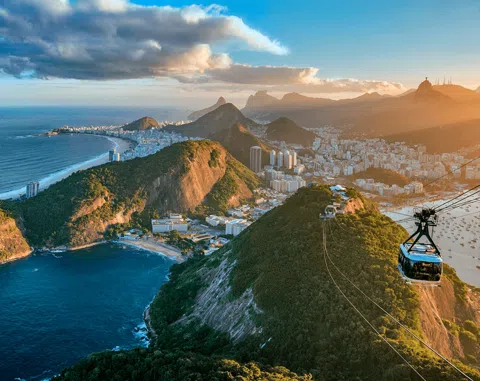
The Rio De Janeiro issue
The Republic of Sand: How Rio's Beaches Became Its Only True Democracy
In a city divided by hills and income, the beach is the one address where everyone holds an equal claim — a guide to Rio's democratic shoreline, from Arpoador's sunset to Prainha's wild break.

By Marit VanderbergRio's neighbourhoods, staircases and cable-car views
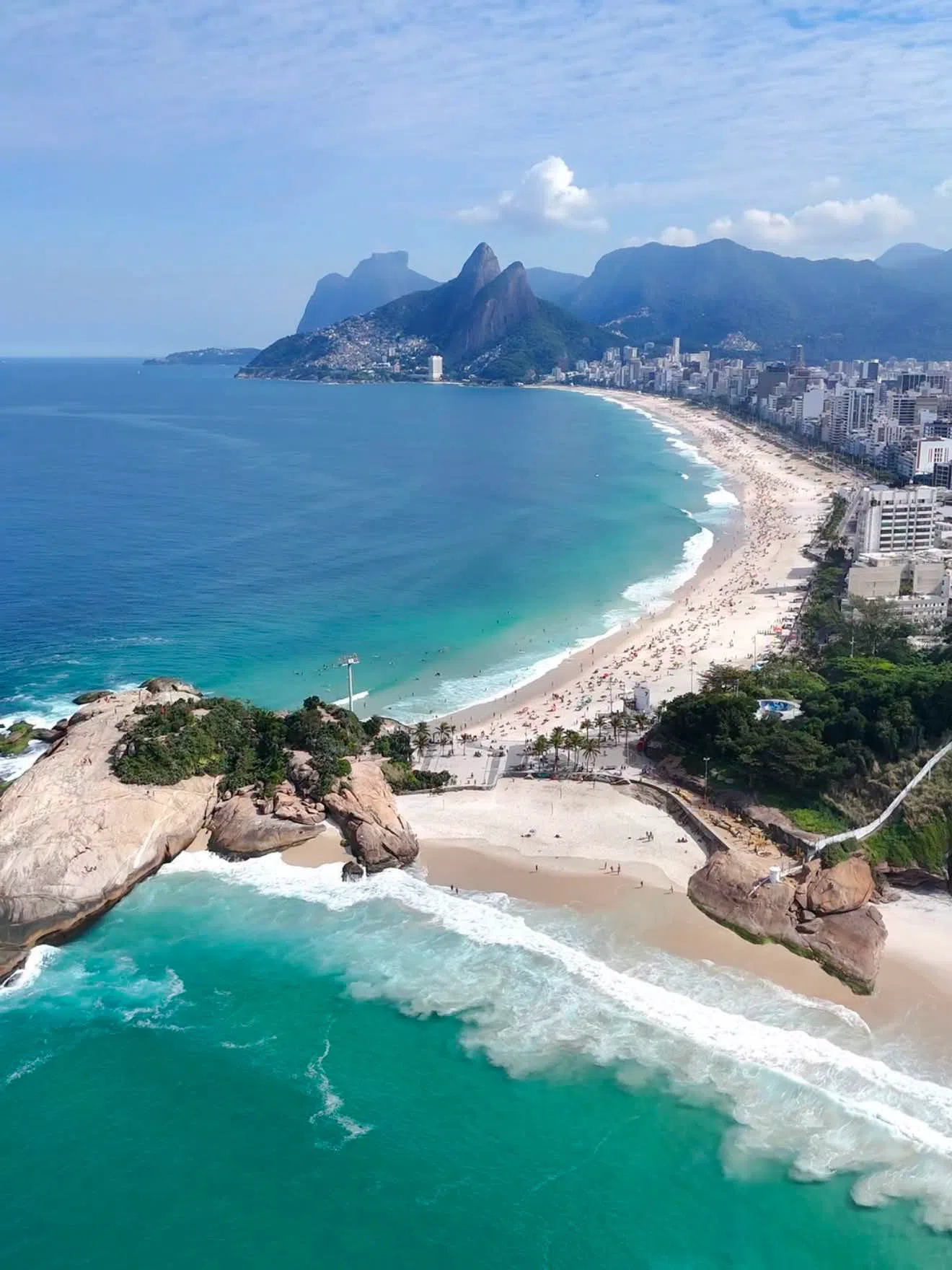
Rio de Janeiro is a city that keeps most of its treasures behind a price, a gate, or a long climb — and then, at the water's edge, it gives the best of itself away for nothing. The sand is the one place where the banker from Leblon, the surfer from the Zona Oeste, and the family who took two buses from the north all lay their towels on the same flat ground and answer to the same tide. Cariocas have a word for this ease — praia is less a location than a civic mood — and understanding it is the difference between visiting Rio and being briefly, gloriously absorbed by it.
This guide walks the shoreline the way the city actually uses it: not as a single beige ribbon but as a string of distinct republics, each with its own crowd, its own rituals, and its own unspoken rules about who fits where. Every place named here is one you can genuinely turn up to. What follows sorts them so you can plan a week without wasting an afternoon on the wrong stretch of sand.
Ipanema and Arpoador: the social heart

If Rio has a town square, it is the sand between Arpoador and the far end of Ipanema. Start at the rock. Praia do Arpoador (Arpoador, between Ipanema and Copacabana) is a free public outcrop and beach where, every single evening, the crowd does something no guidebook can quite prepare you for: as the sun drops behind the Dois Irmãos peaks, the whole gathered mass of strangers turns and applauds. It is not staged for tourists; it is a genuine carioca ritual, performed for the city's own pleasure. Big groups claim the rock early — in high summer you want to be settled by 5pm to get a perch — and because it costs nothing and welcomes everyone, it remains the most honest introduction to how this city feels about its own beauty.

A short walk west brings you to Ipanema Beach – Posto 9 (Ipanema), the free public stretch that has served for decades as the meeting point for the young, the bohemian, and a large and visible LGBTQ+ crowd. Groups sprawl across their kangas — the thin sarongs that double as beach real estate — and the mood is unhurried, stylish, and entirely self-selecting: nobody vets you, but the sand around Posto 9 has always known exactly who it is. Renting a chair and umbrella runs roughly R$20–40 and buys you a base for the day. This is where to be if you want to feel the city's beach energy at full volume rather than watch it from a distance.
The quiosque — the beachfront kiosk — is central to how Ipanema drinks and grazes, and the modern face of it is Sel d'Ipanema (Ipanema, at the Posto 9 hub), a newer, design-forward walk-in kiosk that anchors the scene with cocktails and petiscos. Expect to spend somewhere in the R$40–120 per person range depending on how long you linger. Casual groups are welcome and it fills quickly at golden hour; there is no reservation ritual, only the patience to wait for a table to turn.

Arpoador's forgiving beach break also makes it the sensible place to learn to surf, and Mandala Rio Surf School (Arpoador) runs bilingual lessons — private or group, with no minimum size — that you book informally over WhatsApp. Boards and wetsuit are included, and the roughly US$35–60 (R$180–300) per person price makes it an easy add to a beach morning rather than a whole-day commitment. It suits nervous first-timers and mixed-ability groups equally, which is not something every surf school can honestly claim.

Plan your Rio De Janeiro trip
Live prices from our booking partners.
Free cancellation on many rooms. We may earn a commission when you book.
Copacabana and Leblon: the grand stage and the family table
Round the headland and the register changes. Copacabana Beach – Avenida Atlântica (Copacabana) is the free public beach that the whole world pictures when it pictures Rio: four kilometres of Portuguese-pavement promenade, an unbroken line of kiosks, pickup football games materialising on any patch of open sand, and vendors threading through the towels calling mate! biscoito Globo! in a rhythm that becomes the soundtrack of your afternoon. It absorbs groups of any size without noticing them, and on New Year's Eve it hosts one of the planet's largest gatherings for the fireworks. Copacabana is less fashionable than Ipanema and entirely unbothered by the fact — it is the definitive Rio beach scene precisely because it belongs to no single tribe.


Copacabana is also where a beach sport was born, and the most authentic way to try it is at ACAF – Associação Carioca de Futevôlei (Copacabana), billed as the world's first footvolley school and running on this exact sand since 1982. PE-qualified former professionals teach the game — think volley rules played only with feet, chest, and head — in classes built for visitors and groups, priced around R$120–250 per class. You can arrange a private session or join an existing one; either way it is a rare chance to learn a discipline on the ground where it was invented.
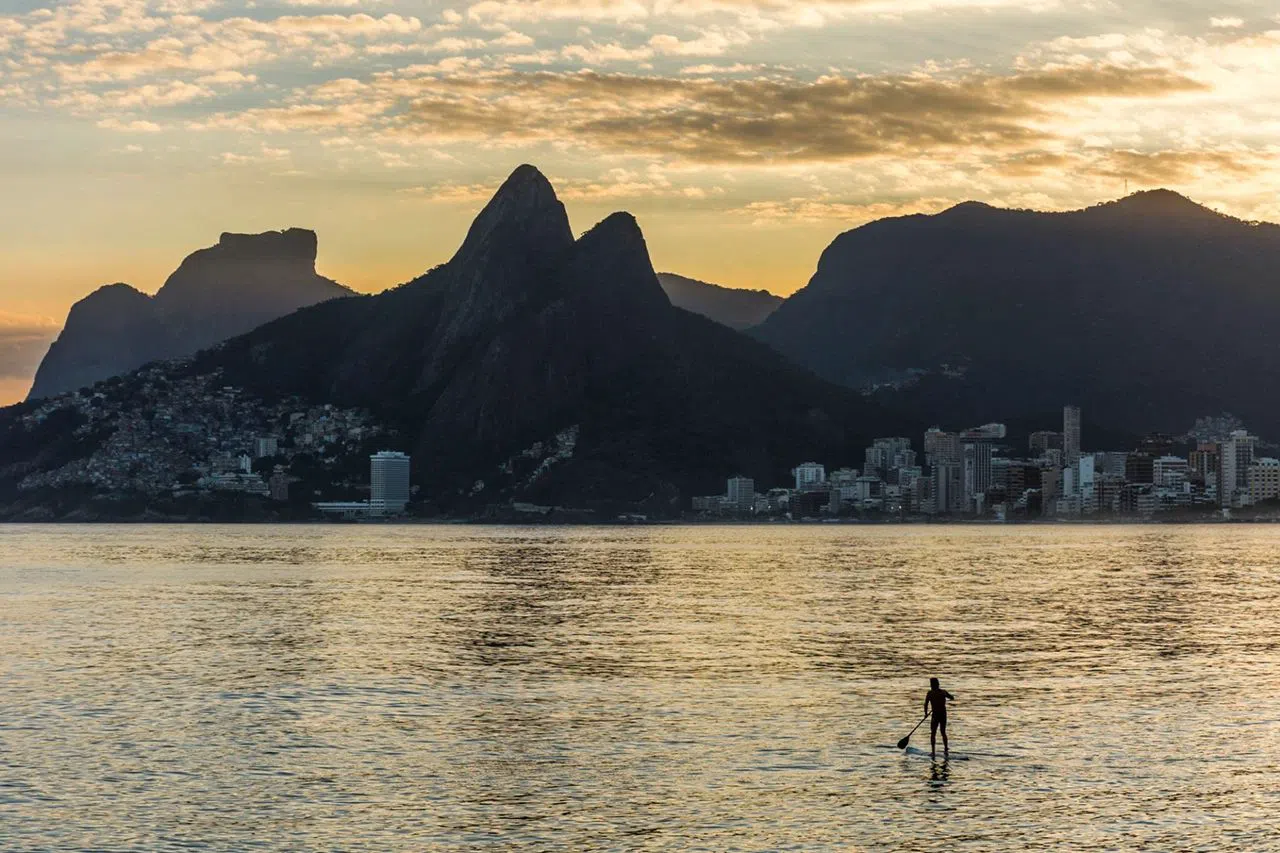
For a calmer perspective, Rio Natural (Stand-Up Paddle) (off Copacabana) runs small-group guided SUP tours at sunrise and sunset, suitable for complete beginners and priced from around US$62 (R$300+) per person. Floating just offshore, watching the crescent of the city wake up or wind down, is the gentlest way to understand the geography that makes Rio Rio — and it pairs naturally with a surf lesson for a group that wants variety rather than one long session in the waves.
Keep walking west, past the canal, and Ipanema gives way to Praia do Leblon – Mirante do Leblon (Leblon), the calmer, more polished end of the strip. This is the family side of Rio's beach culture: the water is a touch gentler, the crowd skews toward parents with children, and the small clifftop viewpoint, the Mirante, delivers a quieter sunset than the scrum on Arpoador's rock. It is free, like all the public sand, and it suits groups travelling with kids who want the Ipanema-Leblon glamour without the elbows.

Beyond the postcard: Urca, Barra, and the wild coast
Some of the most carioca beach moments happen where there is barely any beach at all. Mureta da Urca (Bar Urca) (Urca) is a case in point: a protected cultural-heritage bar operating since 1939, where the ritual is to buy a cold beer (R$10–15) and a pastel (R$12–20) at the counter and carry them across the road to sit on the low seawall. Large, loose groups gather along the wall at sunset with the bay in front of them and Sugarloaf to one side. It is not technically a beach, but it is pure beach-town culture, and it is one of the cheapest genuinely memorable evenings the city offers.

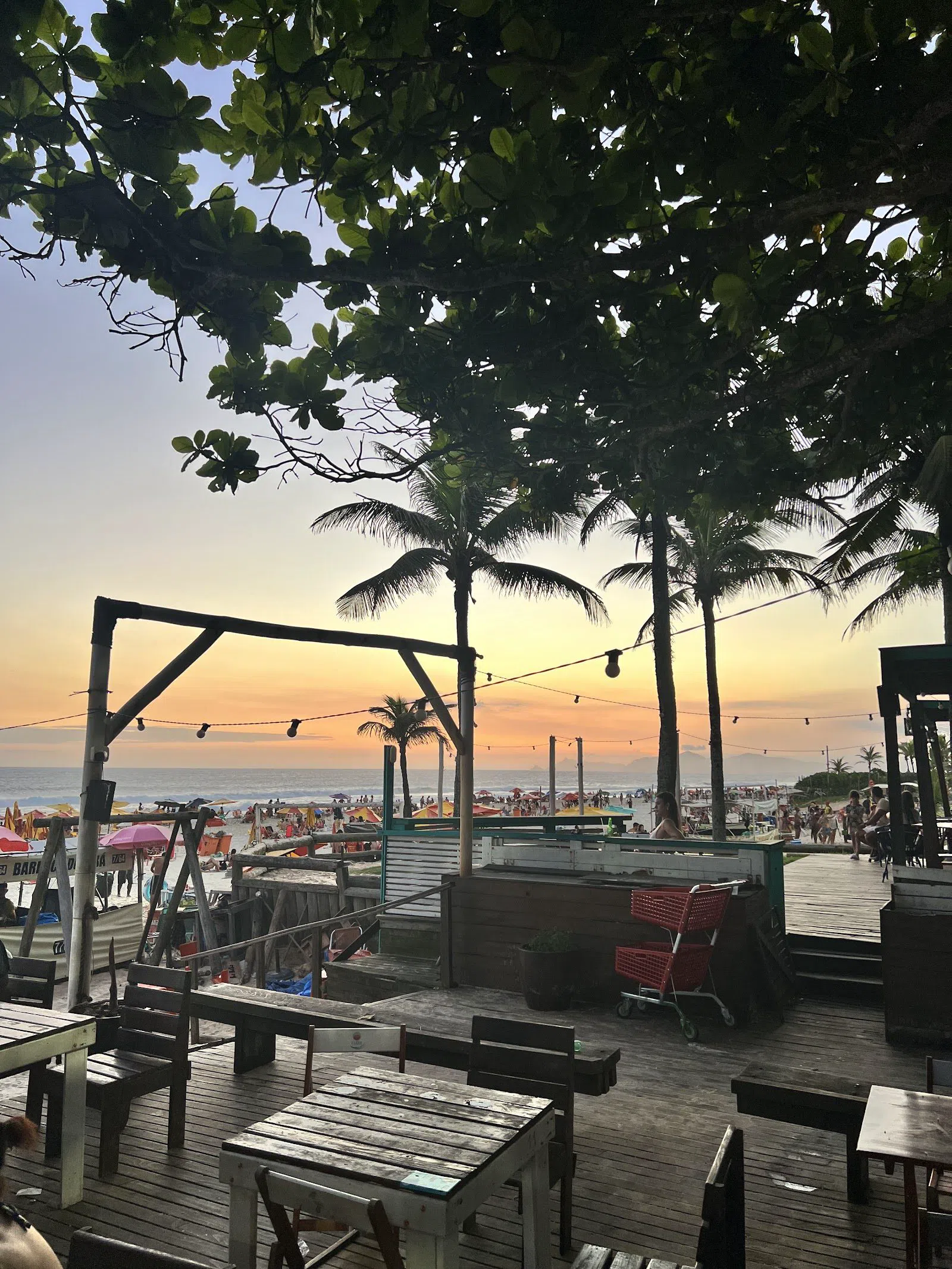
Out west in Barra da Tijuca, the kiosk tradition takes a healthier, sportier turn at Barraca do Pepê (Barra da Tijuca), founded by the legendary hang-glider Pepê and now run by his son. It pioneered healthy beach food — juices, wraps, açaí done properly — and remains a genuine Barra institution where surfers and beachgoers cluster. Expect roughly R$25–60 per person, and expect it to be busy; its fame is deserved and widely known.
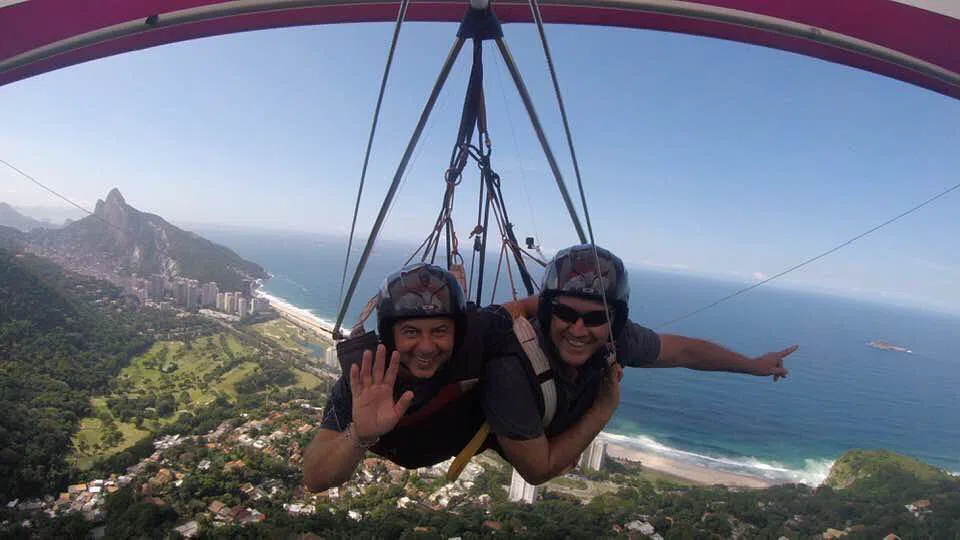
Barra is also the launch point for Rio's most cinematic single experience. Just Fly Rio (São Conrado Beach) runs tandem hang-gliding flights where owner-pilot Paulo Celani, with 36-plus years in the air, takes one passenger at a time off the ramp above the forest and lands directly on the sand below — linking the city's mountains and its shoreline in one arc. It is a premium outing at around R$600–900 (US$130–180) and books groups sequentially rather than together, so factor in waiting time. No experience is needed, but this is genuinely the one category where you should check the operator's safety record for yourself before committing; a reputable pilot will expect the question.
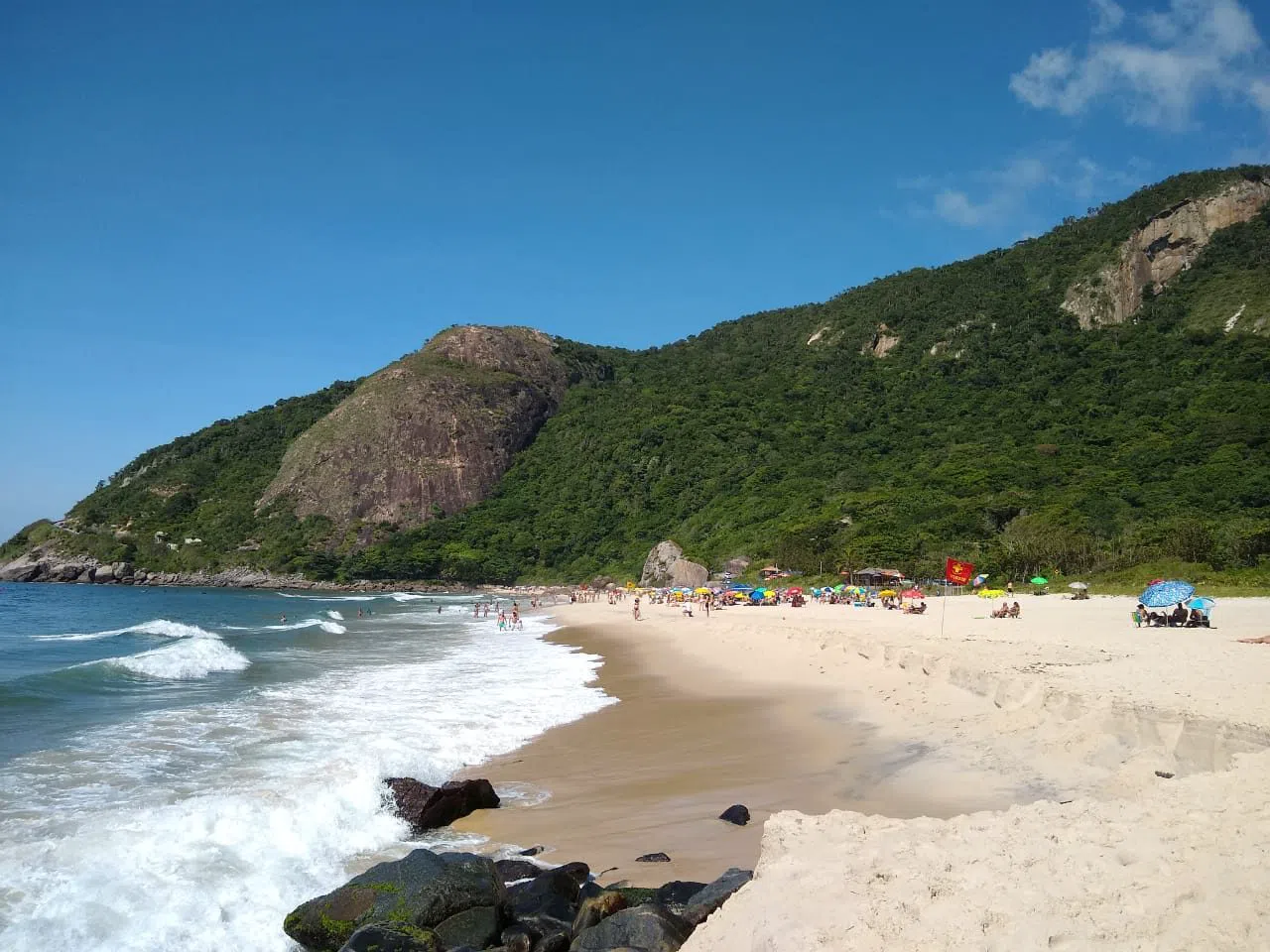
For those willing to leave the postcard behind entirely, Prainha (Recreio, inside a protected reserve) is the reward. Rio's most consistent wave breaks in this forest-backed cove, and its wildness is real: there is no metro, no easy bus, and you reach it only by car or the dedicated Surf Bus, which makes it best organised as a group day out or a surf trip. It fires from April to September. The trade-off for the effort is a beach that still shows the untamed side of a coast the rest of the city has long since tamed.
When you want a lounger, not a kanga
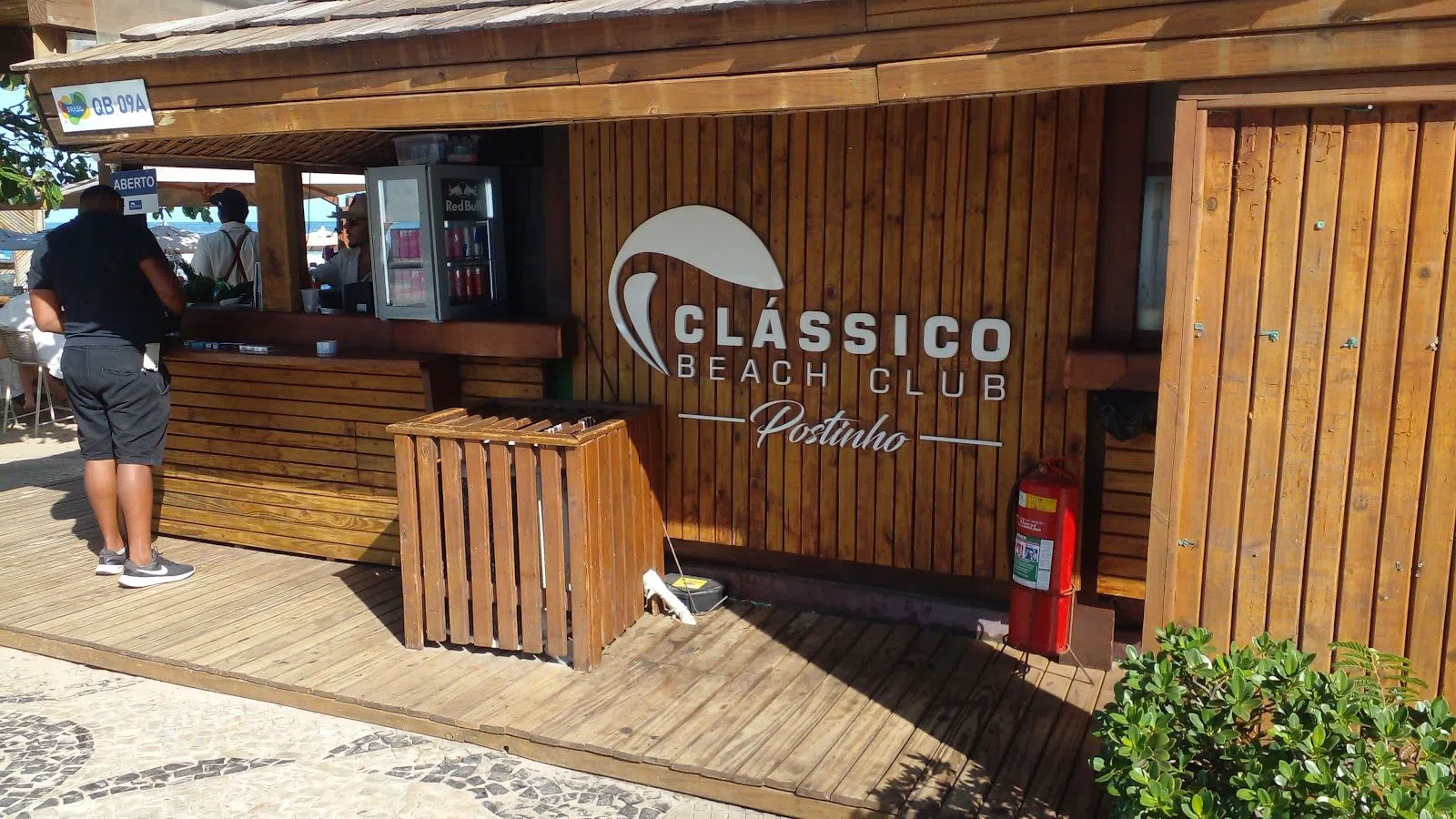
Not every beach day has to be spent on a thin cloth on public sand, and Rio's answer to the upmarket beach club is Clássico Beach Club (multiple seafront locations — Urca, Leme, Barra, and Grumari). This is the lounger-and-cocktail take: table service, food and drinks running roughly R$120–300 per person, and a more curated crowd than the open beach. Be clear on how it works, though — it is walk-in and first-come-first-served, with no reservations, so at peak times you should expect a wait rather than a guaranteed spot. It suits groups who want comfort and a set base for the day, and it is the one entry here that trades the great democratic sprawl of the public sand for something deliberately more polished. There is no strict door policy to dread, only the reality of capacity.
A note on that democracy, honestly stated: the public beaches genuinely welcome everyone, but they are not uniform. Posto 9 self-selects toward the young and bohemian, Leblon toward families, Copacabana toward everyone at once. None of these are rules enforced at a door — they are simply the grain of each stretch, and reading that grain is how you land in the right place with the right crowd.
Practical notes
Getting there. The Ipanema–Leblon–Copacabana axis is well served by Metro Rio (stations at General Osório for Ipanema and several stops along Copacabana), and it is the easy, walkable core of a beach trip. Urca and São Conrado are best reached by taxi or ride-hail. Barra and Prainha are a real distance west — budget 45–90 minutes by car depending on traffic, and remember Prainha has no metro and only the Surf Bus or a private car as options.
Cash and cards. Bring some cash in reais for kiosks, seawall counters, chair rentals, and vendors, many of whom prefer it; cards and Pix are widely accepted at the beach clubs and larger kiosks but not everywhere on the sand.
Timing. Aim to be at Arpoador by 5pm in the December–February high season if you want a sunset spot. Prainha's surf is best April–September. The public beaches are busiest on hot weekends, when the whole city descends; a weekday morning is calmer for lessons and for families.
Budget shape. The sand itself is free — this is the whole point. A modest beach day is a chair, a couple of cold drinks, and a snack for well under R$100 per person. The activities (surf, footvolley, SUP) sit in the low-hundreds of reais, and hang gliding is the one genuine splurge. For where to base yourself, the Ipanema–Leblon–Copacabana corridor keeps you walking distance from most of this guide; start your search with the Rio De Janeiro hotel search, and for context on neighbourhoods, food, and the wider city see the full Rio De Janeiro guide.
Spend a week working along this shoreline and you begin to grasp what cariocas have always known: that the beach is not Rio's escape from itself but its truest expression — the one republic of sand where, for the length of an afternoon, everyone belongs.
Before you go
Which Rio beach is best for first-time visitors?
Ipanema around Posto 9 and Copacabana's Avenida Atlântica are the easiest introductions — both are free public beaches, well served by the metro, lined with kiosks, and welcoming to any group size. Arpoador, between them, is essential for the nightly sunset applause.
Are Rio's beaches free, and what does a beach day actually cost?
All the sand is free and open to everyone. A relaxed day costs well under R$100 per person for a rented chair and umbrella (about R$20–40), a couple of drinks, and a snack. Beach clubs like Clássico run R$120–300 per person, and activities such as surf or footvolley lessons sit in the low hundreds of reais.
Where can I learn to surf or try footvolley in Rio?
Mandala Rio Surf School teaches beginners on Arpoador's forgiving break, bookable by WhatsApp for around US$35–60. For footvolley, ACAF on Copacabana is the world's first footvolley school, running since 1982 with ex-pro instructors, at roughly R$120–250 a class.
How do I get to Prainha, and is it worth the trip?
Prainha sits inside a protected reserve in the far west and has no metro — you reach it only by car or the dedicated Surf Bus, so it works best as an organised group day. It rewards the effort with Rio's most consistent wave (best April–September) and a wild, forest-backed cove far from the postcard beaches.
Do Rio's beach clubs and bars have strict door policies?
Not really. Clássico Beach Club is walk-in and first-come-first-served with no reservations, so the only barrier is capacity — expect a wait at peak times rather than a guest list. Public beaches have no door at all, though each stretch has its own crowd: Posto 9 skews young and bohemian, Leblon toward families, Copacabana toward everyone.
When is the best time of day to visit Rio's beaches?
Late afternoon into sunset is the carioca prime time. Aim to reach Arpoador by 5pm in the December–February high season to claim a spot for the sunset ritual. Weekday mornings are calmer for lessons and families, while hot weekends bring the whole city to the sand.